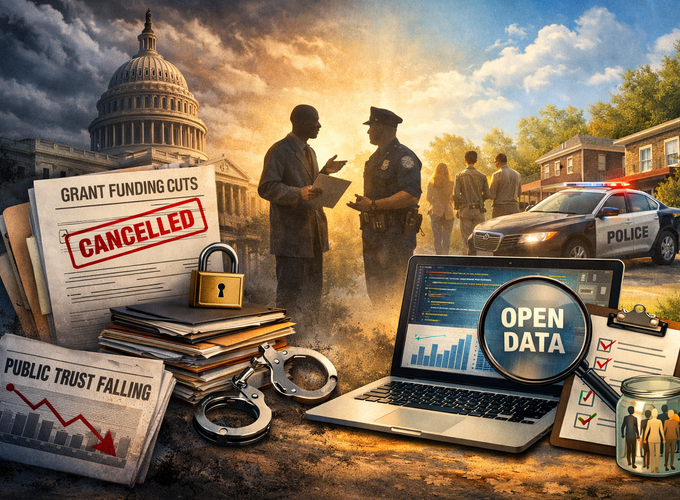
Science Under Scrutiny: Strengthening Criminal Justice Research through Transparency and Local Engagement
Abstract
Criminal justice research faces a credibility crisis—one that predates recent political turbulence but has been exposed and accelerated by it. For decades, our discipline has tolerated questionable research practices: publication bias, underpowered studies, p-value hacking, and HARKing. These problems have always undermined the reliability and replicability of our work, but we have largely gotten away with them. We can’t anymore. At a time when universities face political scrutiny, federal funding streams remain unstable, and public trust in science is increasingly fragile, our longstanding transparency problems are now being weaponized against us. Drawing on our experiences as mid-career scholars at a R-2 university collaborating with agencies in Nebraska and across the United States, we argue that the field must move beyond discussion to action. We must embrace open science practices—transparent articulation of assumptions and hypotheses, clear documentation of data-generating processes, and the sharing of data and code whenever possible. These practices not only strengthen research credibility but also build trust with practitioners and communities who still need rigorous research to guide their decisions. In an era when the legitimacy of science itself is contested, transparency and local engagement are essential for ensuring the future resilience and relevance of criminal justice research.

Justin Nix
Distinguished Professor of Criminology and Criminal Justice
My research interests include police legitimacy, procedural justice, and officer-involved shootings.